

 Free Newsletter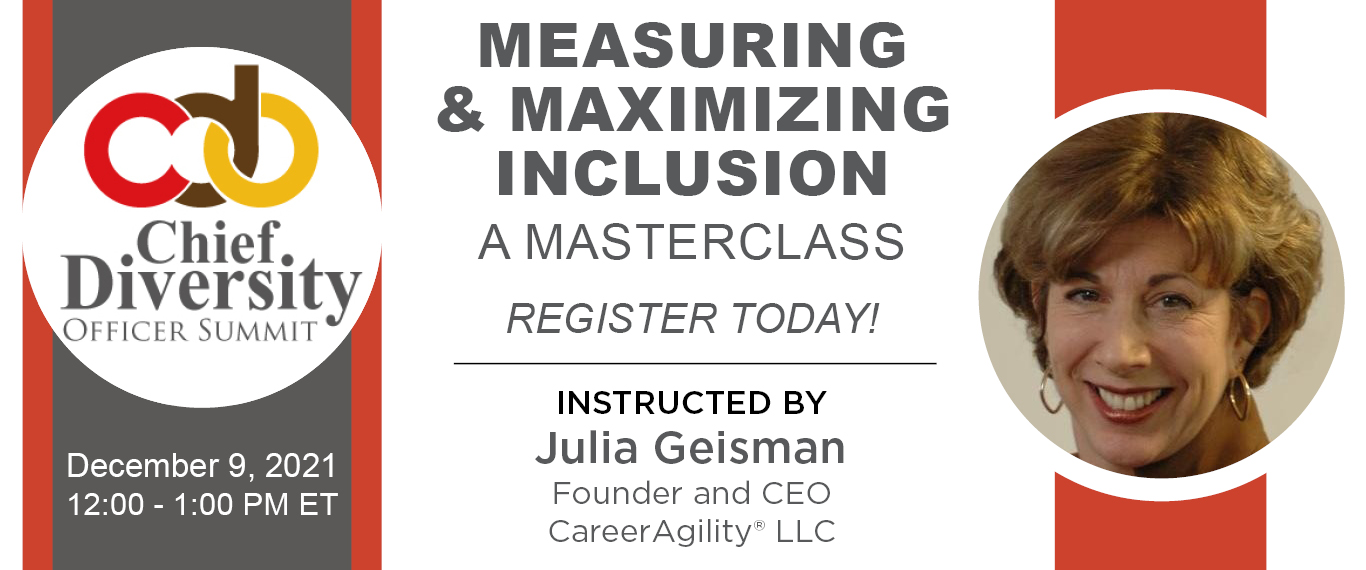

Our Expert Speaker

Masterclass Description
Inclusion is the DNA of organizations, yet measuring it remains a challenge for DEI professionals. For years DEI metrics have been based on the number of hires and promotions, training programs, employee or business resource groups, salary audits, and retention data. These metrics reflect diversity and equity; they say nothing about the state of inclusion. While it is recognized as an important part of the equation, quantifying inclusion in a meaningful way is a persistent problem. It is an intangible concept such as an emotion, feeling, or idea.
The key to effectively measuring inclusion lies in transforming a perception into relevant, useable data needed to measure, monitor, and quantify DEI program success.
Attendees will leave this session with:
- An awareness of the importance of an integrated approach to building an inclusive work environment.
- An understanding of the difference between engagement surveys and perception-based assessments for measuring inclusion.
- The foundation for successfully quantifying inclusion and demonstrating a return on investment for the DEI function within an organization.